
The Interplay Between Product Management, Product Development, and Production
Interview by Denis Trost with Michael Rosenbauer
To respond to constantly changing market demands and growing competitive pressure, companies must be able to make quick and clear portfolio decisions. These decisions must be implemented efficiently throughout the organization. To create synergies within the company, close coordination between product management, product development, and production is necessary. BSH Hausgeräte GmbH summarizes this approach under the term “Architecture Management.”

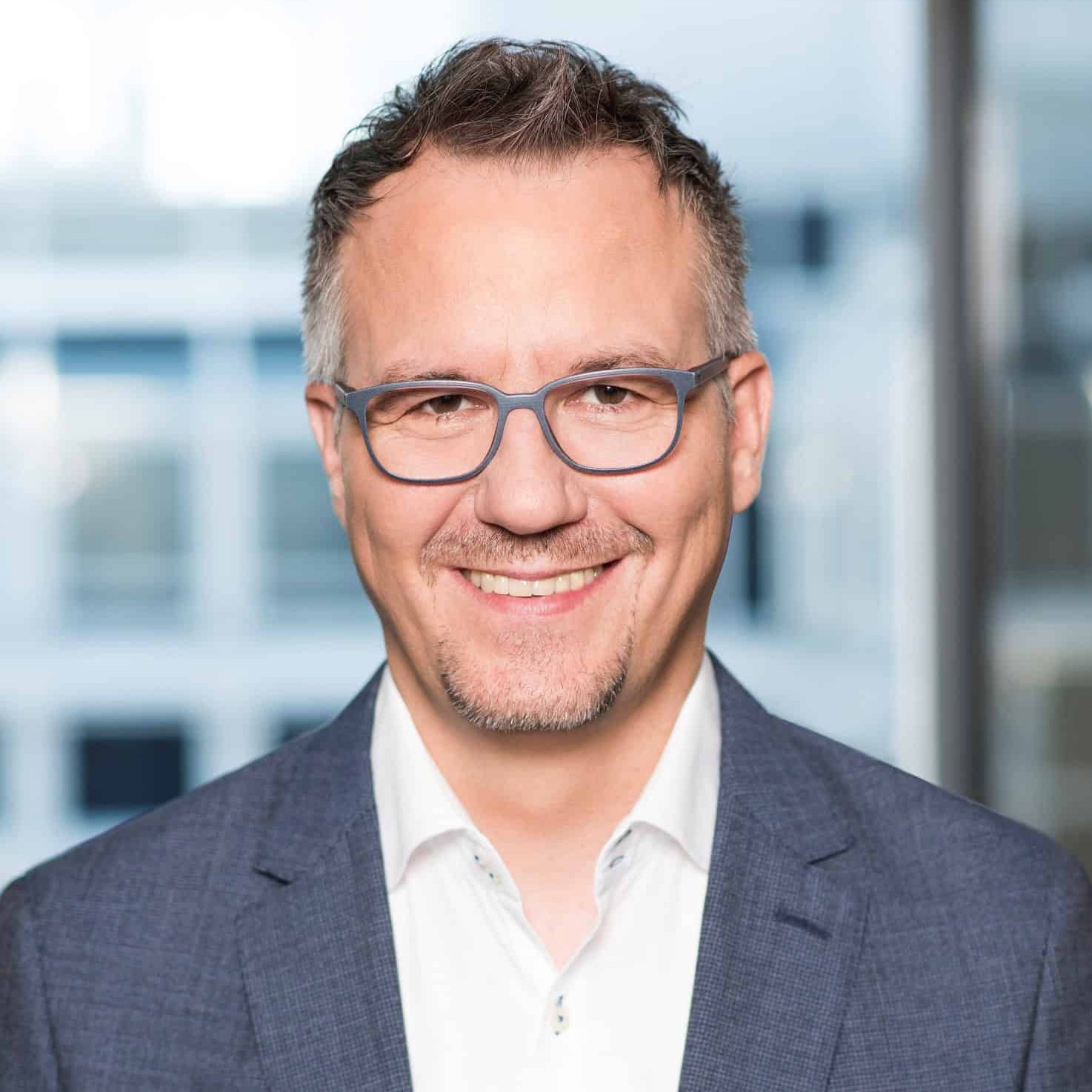
In an interview with Denis Trost, Michael Rosenbauer, Head of Global Development at BSH, explains what Europe’s leading home appliance manufacturer means by “architecture management” and what challenges the company faces.
Michael Rosenbauer has been with BSH since 1988. After joining the company as an engineer in the Central Engineering Department, he held various management positions in development and production. Since 2021, he has been Head of Global Development at BSH. His focus is on developing innovations, implementing architectures, and reducing complexity.
3DSE: Mr. Rosenbauer, architecture management has long been a focus at BSH. What is your approach, and what exactly do you mean by architecture management?
Michael Rosenbauer: We also refer to architecture management internally as PACT. PACT describes the interplay between program, product, and production architecture—that is, product management, product development, and production. It’s a concept that Prof. Schuh from RWTH Aachen University introduced to us. The core element: the customer and their requirements are placed at the center. For a long time, our credo was to generate revenue growth through an increase in product variants. The catch, however, is that this led to the creation of many independent projects, which massively increased internal complexity. It thus became clear that the concept would no longer be sustainable in this form in the long run. An important goal of our architecture management is therefore, among other things, to counteract this increase in complexity.
3DSE: You’ve been with the company for a long time. How did you experience the introduction of PACT at BSH, and what motivated BSH to address this issue?
Michael Rosenbauer: I cut my teeth in the dishwasher product category—which we refer to internally as “Dish Care”—and architecture has always been a key focus throughout my career at BSH. Dish Care was already addressing the topic of architecture when dishwashers were first added to BSH’s product portfolio. At that time, Dish Care was the only product category with a product architecture. The efficiency benefits for the category were quickly measurable. At the same time, VW was making headlines with its MQB* and MLB* platforms (*Modular Transverse Matrix and Modular Longitudinal Matrix). This was the catalyst for addressing the topic of architecture company-wide—that is, across all product categories. In 2010, we at BSH launched the PACT initiative to standardize architectures.
3DSE: What other goals are you pursuing with PACT at BSH?
Michael Rosenbauer: With PACT, we are aiming to achieve three main goals. First, to reduce the time it takes for a product to reach the market—what’s known as time-to-market. Second, we want to offer our consumers the option of customization. And finally, our goal is to simultaneously optimize resource use with PACT. When I think about customization, our consumers should be able to choose a feature from our 60-centimeter-wide dishwasher—one they want—and have it included in their 45-centimeter-wide dishwasher as well. This requires harmonized architectures and interfaces; without them, we cannot manage our product diversity while simultaneously meeting customer needs.
3DSE: Earlier, you said that PACT consists of program, product, and production architecture. What does that mean at BSH?
Michael Rosenbauer: The program architecture comes first and defines the product portfolio. Our colleagues in marketing have the difficult task of anticipating future customer expectations and meeting them through products and product features. Synergies between products should be taken into account at this early stage.
Product architecture encompasses both hardware and software, as well as E/E* (*electrical/electronics). The products within an architecture can be broken down into modules. To ensure interchangeability among these modules, the interfaces must be carefully defined and implemented. Particular challenges arise between different products or even different product families, yet it is precisely these that hold the greatest economic potential.
Architectural work goes beyond the product and portfolio and must also be reflected in production—that is, in “production architecture.” Production architecture comprises a modular system of standardized production processes and technologies. At the heart of PACT is the collaborative coordination and synchronization of all three architectures.
3DSE: What challenges is BSH facing today, and how can PACT help it overcome them?
Michael Rosenbauer: One challenge is consumers’ growing expectation for customized and market-specific solutions. On the one hand, we need to offer dishwashers that can handle small tea glasses, and on the other, appliances that can accommodate large pizza plates. Developing every appliance from scratch is not cost-effective. Thanks to our modular architecture, we can keep the majority of the appliances the same while adapting the market-specific features.
The second major challenge is the short innovation cycles. We need to be able to bring innovative features to market quickly. A good architecture allows us to make rapid adjustments with minimal changes to the product.
To address both of these challenges, we need to think carefully about the architecture’s structure from the outset. This process optimization in product development requires a great deal of effort in the early stages. However, the benefits are only realized later on.
3DSE: Given your background in development, your core expertise lies in product architecture. So let’s focus on this question: When should an existing architecture be replaced with a new one?
Michael Rosenbauer: In my view, there are three drivers for transitioning from an existing architecture to a new one. First, there is the complexity, which grows continuously over the lifetime of an architecture. At a certain point, an architecture becomes too complex to operate effectively. Two other factors that indicate an architecture is no longer efficient are when innovations cannot be implemented or when cost-saving opportunities can only be realized at great expense.
3DSE: So complexity is at the heart of this entire endeavor. What kind of complexity—or rather, what kind of reduction in complexity—are you aiming for?
Michael Rosenbauer: The goal should really always be a complexity—or variety of variants—of one. In my view, this requires a sort of reversal of the burden of proof. Engineers and architects must prove that a single variant is not feasible. Only in this way—starting from the bottom up—can the optimal solution be clearly identified. When I think, for example, of our drive systems in the laundry care product category—where we used to have 60 variants and were able to reduce them to 4—it quickly becomes clear that a top-down approach leaves much more room for discussion.
3DSE: Overall, it sounds as if architecture management at BSH is quite well-established. What does the future hold for PACT within the group?
Michael Rosenbauer: Yes, nothing will change in terms of architecture management at our company in the medium term. However, our focus will increasingly shift toward electronics and software, as well as digital “features.” What we need is a cultural shift. We’re a mechanically oriented company; software still poses a challenge for us. At the same time, the number of electronic modules is constantly increasing—the amount of code now found even in the simplest dishwashers would have been unimaginable just a few years ago. This means we need standardized CPUs* (*Central Processing Units), core electronics, and software across our entire portfolio to keep the complexity manageable. Electronics and software architecture must therefore be applied consistently across all products to ensure these elements are interchangeable.
Another challenge we still need to address as part of PACT is incorporating cross-architectural design elements across all products to ensure a consistent brand image for consumers. The biggest hurdle here is collaboration across different product categories, which has a massive impact on project schedules and costs. For Apple, this may be “state of the art,” but for us, this goal is a challenge—especially as the proportion of software in development continues to grow. That’s why we continuously review our process models and must adapt them as needed.
3DSE: You’ve highlighted many problem areas here—or at least areas that need work—so what is your personal outlook on these PACT topics for the future?
Michael Rosenbauer: I’m optimistic about the future; I’ve always been a developer, so I need a positive outlook. [laughs] We still have a lot of work to do on architecture at BSH. We recently optimized our internal organization, which I see as a great opportunity. It’s exhausting and challenging because you have to do a lot of persuading within the company to secure the necessary resources and “manpower” for PACT. In some of our development areas, the concept of architecture has already been fully embraced, which is why I’m convinced that any challenges in the field of architecture will continue to be tackled with energy and determination.
3DSE: Mr. Rosenbauer, thank you very much for taking the time to do this interview and for your fascinating insights and perspectives on architecture management at BSH.
Information About BSH
Founded in 1967 as a joint venture between Robert Bosch GmbH (Stuttgart) and Siemens AG (Munich), BSH has been wholly owned by the Bosch Group since January 2015. Over the course of its more than 55-year history, BSH has evolved from a German exporter into one of the world’s leading manufacturers of home appliances. With approximately 62,000 employees worldwide and 39 factories, BSH produces the full range of modern home appliances. Its product portfolio ranges from stoves, ovens, and range hoods to dishwashers, washing machines, dryers, refrigerators, and freezers, as well as small appliances such as vacuum cleaners, fully automatic coffee machines, and food processors.
[fl_builder_insert_layout id=13888]