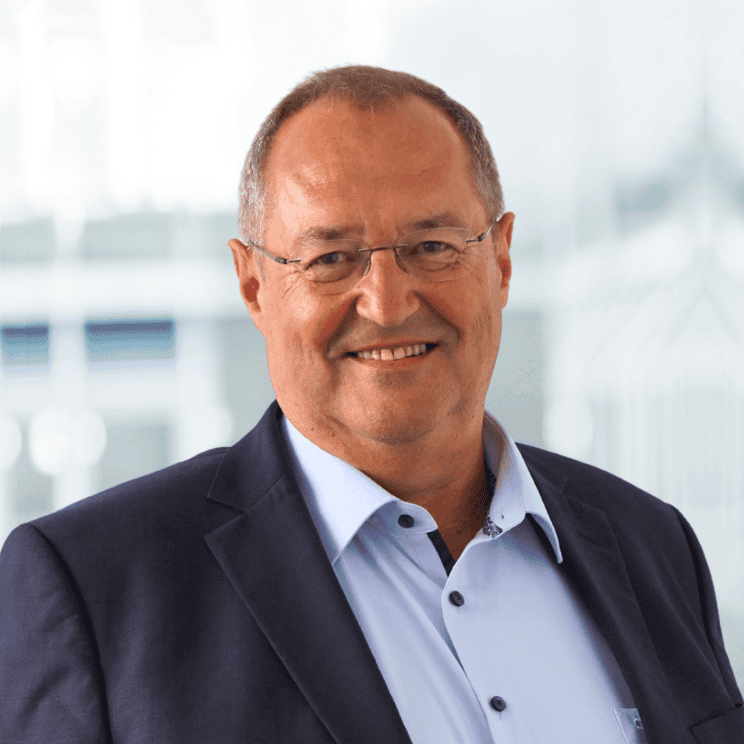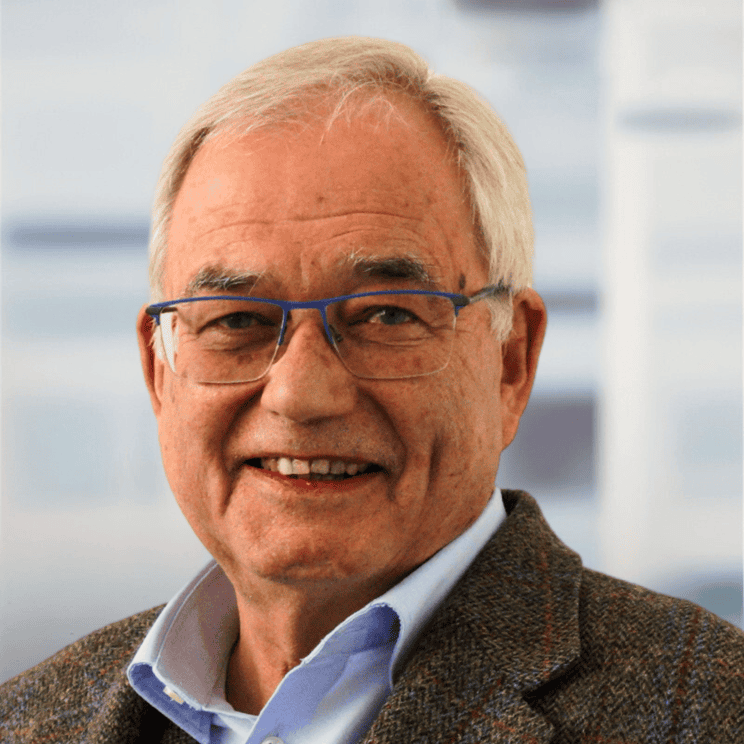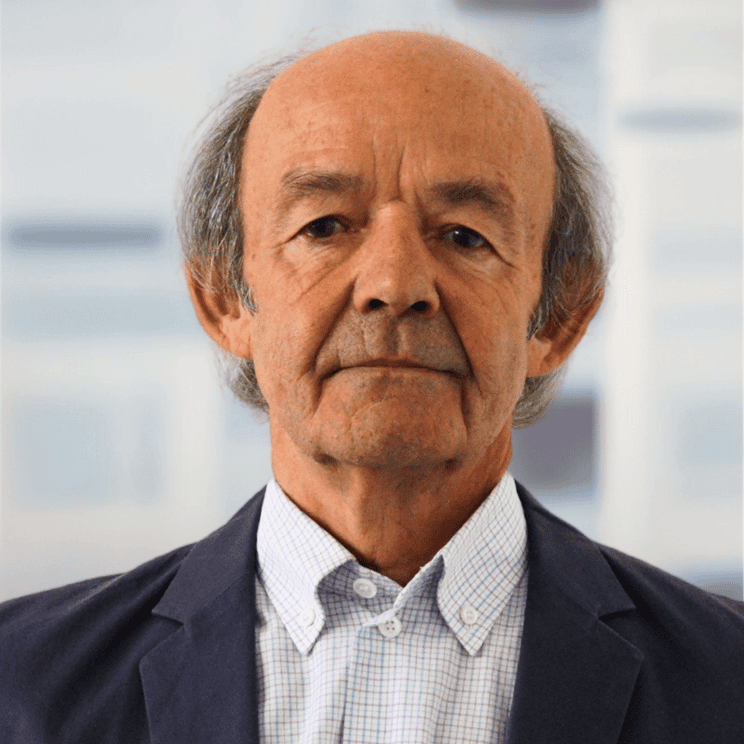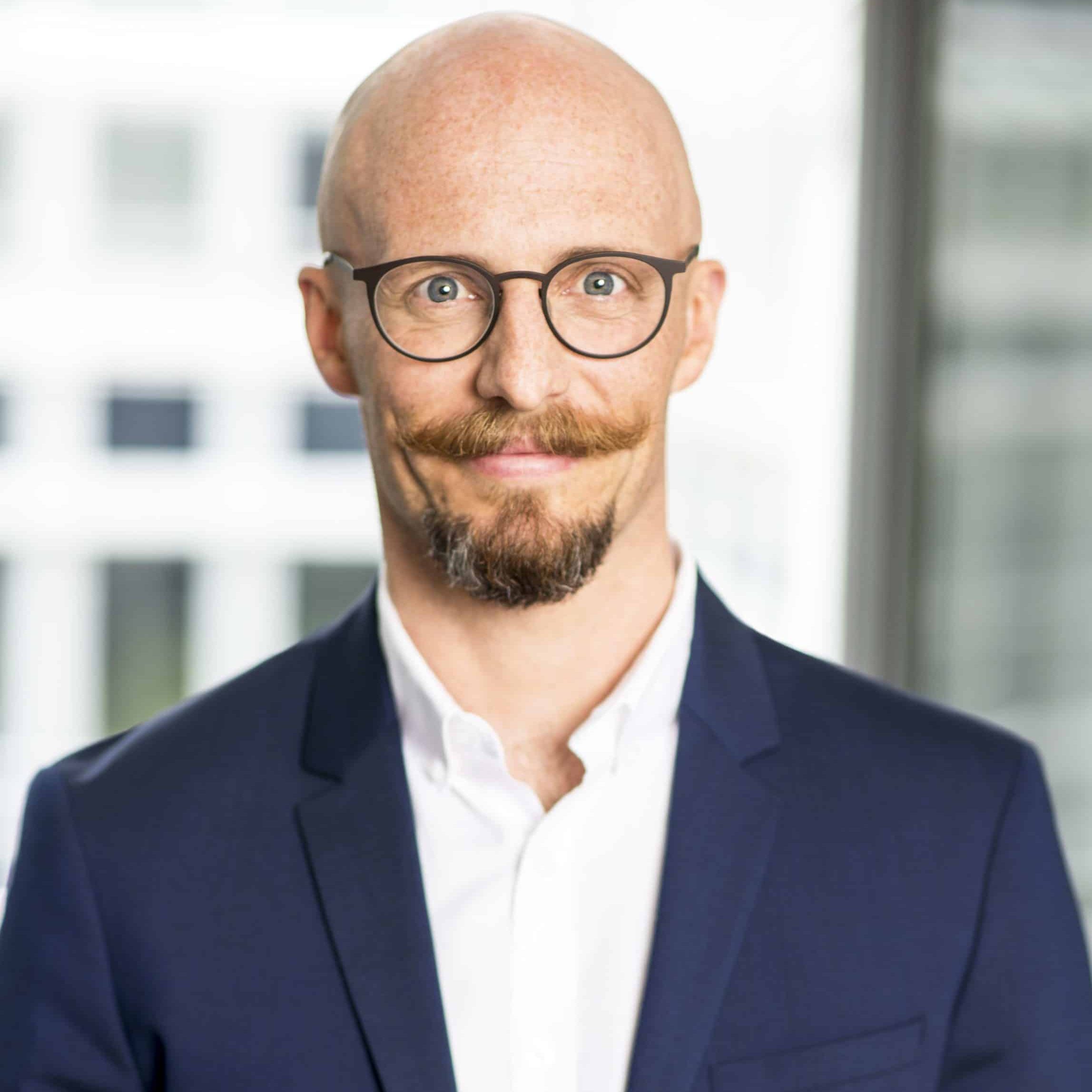

It is used wherever complex systems—such as astronautics, telecommunications systems, and many others—need to be designed. Systems engineering has come a long way since its first major commercial application in the 1940s. According to Ralf Hartmann, the future president of INCOSE, however, its origins date back even further. He is convinced that the builders of the pyramids were already applying systems engineering principles—even if they weren’t aware of it.
Today, companies in almost all sectors use systems engineering. It has become the de facto standard for the development of safety-related systems in large-scale transportation and infrastructure projects.
“Systemsengineering is an interdisciplinary approach to developing complex systems throughout their entire life cycle, which means, in particular, that I’m not focusing solely on the engineering phase. I’m considering the entire life cycle—from production through use to the end-of-service phase—which is very important.” Ralf Hartmann, INCOSE President-Elect
New industrial developments are becoming increasingly complex, and customer requirements are growing along with them. Many specialized disciplines in product development overlap with the various areas of systems engineering. Software development, reliability engineering, information security, risk management, and interface design are some of the individual fields that all contribute to the successful development of sophisticated systems.
So what does this mean for the future? How will systems engineering meet the growing demands of increasingly complex structures? In an expert discussion, Ralf Hartmann spoke with Dr. Armin Schulz, founder and managing partner of 3DSE, about the origins and future of systems engineering and INCOSE. They examined the key challenges and the path forward. Ralf Hartmann also explained the current Systems Engineering Vision 2035 and its importance for the path toward modern and effective systems engineering.
The Origins of Systems Engineering and INCOSE
According to Ralf Hartmann, systems engineering as we know it today emerged around the first half of the20th century. At that time, large, complex programs such as the space exploration mission were in the planning phase, and people realized that successful completion required a new approach.
At first, the focus was very much on the life cycle of development processes, formalizing them, and recognizing that involving hundreds of people from different disciplines in a complex project required a very rigorous documentation process and major reviews to monitor progress at various levels. This is now seen as the old, traditional style of systems engineering.
The process of evolving into a more modern form of systems engineering initially focused on acceleration and expansion. This led to very cumbersome processes, which in turn resulted in highly standardized processes.
“In the meantime, we have ISO standards related to systems engineering life-cycle processes that require a significant amount of formal execution and documentation, and so on.”
Numerous new industries emerged, and some applications in other fields—such as the automotive industry—became more complex. The range of disciplines It no longer dealt solely with metal and motors but expanded to include electronics and software. All the processes involved became increasingly complex. Along the way, there was a significant breakthrough—the digital transformation, which Ralf Hartmann believes is still in its infancy. In his view, there is still a great deal that needs to be done.
This evolution led people in industry, academia, and government to recognize the importance of systems engineering as an essential element of their current and future projects. Professionals in California, USA, came together and founded the National Council on Systems Engineering (NCOSE) in 1990. The nonprofit organization has since become the International Council on Systems Engineering (INCOSE), with approximately 17,000 corporate, individual, and student members. It publishes various informational materials, organizes working groups, and holds an international symposium every year. The goal of the professional society is to create and disseminate information, encourage international collaboration, and promote the profession of systems engineering. Ralf Hartmann has been with INCOSE since 1996. This self-proclaimed “enthusiastic” member is convinced that INCOSE is the only organization dedicated exclusively to the evolution of the definition of systems engineering and the promotion of systems engineering worldwide. In his view, it is the guiding force—both now and in the future.
Key Challenges
In his expert talk, Ralf Hartmann explained the challenges the industry faces as systems engineering evolves. His broader interpretation of systems engineering goes beyond the traditional understanding of the term and encompasses integration across all disciplines throughout the life cycle.
He stated that new industries with completely different business models are now developing products much faster—a process known as agile development. This new concept focuses on efficient processes that integrate people. In his view, the industry today is about achieving the right balance between top-level processes and embracing the many agile streams found in modern businesses and industries.
Ralf Hartmann is certain that some parts of the industry probably don’t call it “systems engineering,” but that they apply (?) it. The important point here is not the use of the term “systems engineering.” It is combining successful processes with long-established system principles from the past, which he sees as a core challenge. Another challenge is the growing complexity of systems. Today’s products include dozens or even hundreds of microcomputers that communicate with each other via software. By comparison, analog systems from about 50 years ago were fairly simple products.
In other words, products are no longer considered in isolation. They are part of what is known as the “system of systems,” which encompasses the context of different systems communicating with one another. Ralf Hartmann defined this as an overarching universe and ecosystem which, if approached without a systems engineering methodology, will make the development of products and systems difficult to manage and the consequences difficult to foresee. For him, this is the major challenge—but also the major opportunity for all industries to apply systems engineering to these kinds of problems.
The future state
A team of community leaders has developed the Systems Engineering Vision 2035. They were assisted by representatives from industry, academia, and government, and the project was sponsored by INCOSE. It replaces the Vision 2025, which was published in 2014. The new version addresses topics such as the global context, the current and future state of systems engineering, and ways to realize this vision through digital transformation, smart systems, sustainability, and advancements in modeling, simulation, and visualization. Vision 2035 is intended to guide the strategic direction of systems engineering for the global community. Its purpose is to assist in the development of strategies to advance the systems engineering capabilities of organizations or projects. Possible applications span a wide range of fields—from biomedicine, defense, and healthcare to energy, telecommunications, transportation, and many others.
The fields of hydraulics, electrical engineering, and software have already entered the digital century. But systems engineering is lagging behind. Once the transition from piles of documents is complete, it will need to embrace a model-based future. Ralf Hartmann explained that this involves having consistent formal models of the overall systems, the breakdown of those systems, and the interfaces. He is certain that simulation will cover all of that, followed by appropriate impact analysis and, specifically, integration into all existing domain models. For him, it is also about integrating all these model-based approaches from all disciplines into a single, integrated framework. The major challenge of the future is orchestrating a development process that involves all these disciplines throughout the entire life cycle. Today’s systems engineering cannot yet provide this.
“I think the dramatic evolution will be in the way systems engineering is expanding as a discipline.”
Using smart cities as an example, Ralf Hartmann explained the holistic problem—which involves human beings and social aspects—in terms of the technical issues of transportation, resources, waste, and procurement management. Assuming that most of the future population will live in megacities, which involve many factors that must be taken into account, systems engineering will play a major role in addressing and solving these challenges.
Pathway to the Future
In his expert talk, Ralf Hartmann explained that Vision 2035 anticipates that the challenges will no longer lie in technical product development. Rather, they will lie in global systems of systems and will also encompass the megatrends of the future—societal challenges such as finding ways to survive on this planet and issues like climate change. These challenges are clearly outlined in Vision 2035. Addressing these issues requires shifting the focus away from systems engineering in isolation and opening up to other domains and approaches. Of course, the traditional domains of product development must also be improved to become more efficient, among other things. But they must be embedded in a more holistic approach.
“So artificial intelligence is part of the systems to be designed, but artificial intelligence is also an element that will help systems engineering and other fields become more efficient.” All the achievements and innovations of the digital century—data analytics, machine learning, and artificial intelligence—will have a significant impact on how systems engineering is used and applied. They will also have a significant impact on the systems that need to be advanced. For Ralf Hartmann, this is something that politicians, social scientists, and everyone in the industry need to understand.
And from an educational perspective, systems engineering must become part of the curriculum in many disciplines.
“Engineering skills need to be part of everyone’s education.”
Systems engineers should not be the only ones involved in the development process. The issues must be translated into the languages and needs of various domains.
Closing Thoughts
Summarizing his discussion with Dr. Armin Schulz, Ralf Hartmann stated that we are currently in the midst of two trends: The first is digital transformation, which poses a challenge simply because the volume of data increases as everything is digitized. In his view, systems engineering is the only way to ensure that the various digital artifacts of the future can interoperate in a reasonable manner. The second trend indicates that current types of systems are rapidly expanding. Returning to his example of smart cities, he fears that the industry will be overwhelmed. The only way to successfully overcome these challenges lies in a holistic systems approach.
His advice to organizations was to form smaller groups of people to help redesign the entire set of processes and ways of working, and to provide them with education and methodological training. The key here, once again, is the interdisciplinary approach, meaning that these individuals do not need technical skills alone. They must also be proficient in social and communication skills. They need to understand legal issues, sustainability considerations, and security threats. He also recommended that companies join and contribute to INCOSE and the Future of Systems Engineering initiative.
“The industry must get involved to ensure that its perspective, its systems, the needs of its customers, and its legal and business environments are properly taken into account in order to advance the principles of systems engineering in the future. Otherwise, you’ll end up with an automotive-based approach applied to healthcare systems—and that won’t work.”
He once again emphasized the importance of a holistic approach, pointing out that integration is not easy to manage because the various disciplines cannot achieve it on their own. However, he believes that if the disciplines come together and find ways to interlock while making use of technical and digital advances, they will gain the speed, agility, and flexibility needed to overcome the new challenges.